
Running a hotel involves much more than welcoming guests and assigning rooms. Hotel owners and staff handle reservations, check-ins, check-outs, billing, food services, staff management and daily reports. Managing all these activities manually can become time-consuming, especially when the property starts receiving more bookings.
For small and mid-sized hotels, managing daily operations efficiently is important. However, many properties still depend on registers, spreadsheets and separate tools to handle their work. This can make it difficult to keep everything organised and access information when needed.
This is where PMS software for hotels becomes useful.
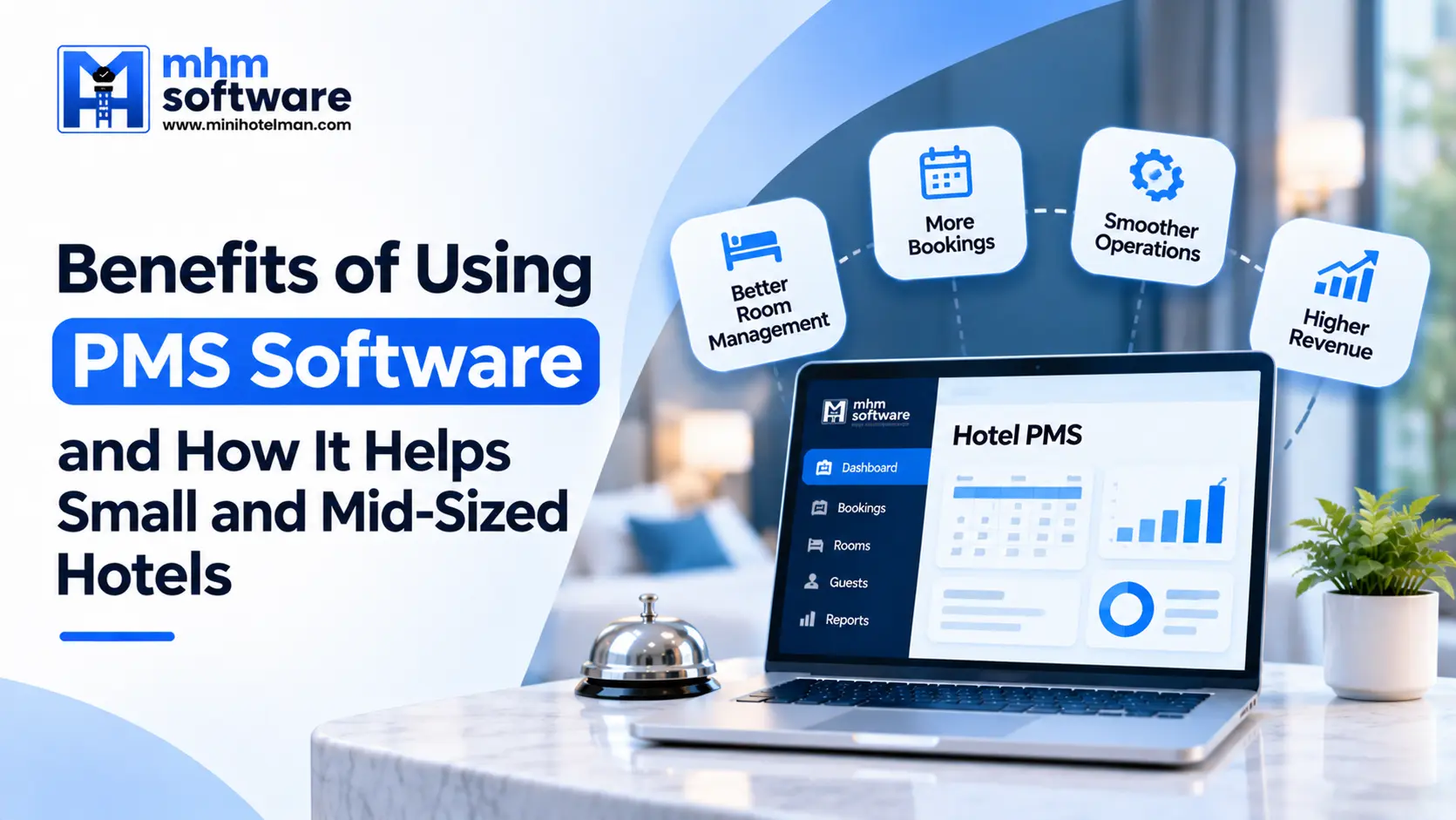
A Property Management System (PMS) helps hotels manage their everyday operations through a single platform. From handling reservations and guest check-ins to generating bills and viewing sales reports, a hotel PMS makes daily tasks easier and more organised.
In this blog, we will explore the major benefits of using PMS software and how it can help small and mid-sized hotels improve their daily operations.
What Is PMS Software in the Hotel Industry?
PMS stands for Property Management System. It is software designed to help hotels manage their day-to-day activities, including reservations, guest information, room allocation, check-in, check-out, billing and reporting.
Instead of maintaining separate registers and records for different activities, hotel staff can use a PMS to manage important information from one dashboard.
A modern hotel PMS can help with:
- Managing guest reservations.
- Handling check-in and check-out.
- Managing room availability and occupancy.
- Generating guest bills and invoices.
- Recording food and room-service orders.
- Accessing sales and business reports.
- Managing staff attendance.
- Organising everyday hotel operations.
For small and mid-sized properties, a user-friendly PMS can make a significant difference by reducing repetitive administrative work.
Why Do Small and Mid-Sized Hotels Need PMS Software?
Small and mid-sized hotels often operate with limited staff. The same employees may handle reservations, guest enquiries, reception duties, billing and other responsibilities.
When these activities are managed manually, even simple tasks can take more time than necessary.
For example, checking room availability may require looking through a register, preparing a guest invoice may involve manual calculations, and finding previous sales records may mean searching through multiple files.
A hotel PMS brings these activities together and makes information easier to access.
It helps hotel owners and managers maintain better control over their operations without making everyday tasks unnecessarily complicated.
8 Major Benefits of Using PMS Software for Hotels
Let’s look at how PMS software can help small and mid-sized hotels manage their operations more efficiently.
1. Easy Reservation Management
Managing reservations is one of the most important responsibilities of hotel staff. They need to keep track of upcoming bookings, guest details, room availability and reservation changes.
Managing everything manually can create confusion, especially when multiple bookings are received through different sources.
A hotel PMS makes reservation management easier by allowing staff to:
- Create and manage guest reservations.
- View booking details.
- Check room availability.
- Access guest information.
- Manage reservation changes.
With reservation information organised in one place, hotel staff can spend less time searching through records and more time assisting guests.
2. Faster Guest Check-In and Check-Out
The check-in and check-out experience plays an important role in how guests perceive a hotel.
Long waiting times at the reception can create inconvenience, particularly during busy periods.
PMS software simplifies these processes by helping staff access reservation details and manage guest information more efficiently.
With an easy-to-use PMS, hotel employees can:
- Access guest reservation details.
- Manage check-in procedures.
- Record guest information.
- Generate bills during checkout.
- Complete checkout procedures more conveniently.
This helps make front-desk operations smoother and creates a better experience for guests.
3. Simplified Hotel Billing
Billing is another important part of hotel operations. Hotels need to manage room-rent charges, food expenses and other applicable services.
Preparing bills manually can increase the chances of calculation mistakes and delays.
A hotel PMS with billing functionality helps staff generate invoices more conveniently and maintain organised billing records.
It also makes it easier to manage different billing requirements, including room-rent bills, food bills and combined invoices, depending on the software’s features.
By simplifying billing activities, hotels can reduce repetitive work and make the checkout process more convenient.
4. Easy Access to Sales Reports
Understanding daily sales and business performance is important for every hotel owner.
However, when sales information is maintained manually, preparing reports and reviewing business performance can become difficult.
PMS software helps hotels access sales reports and organised business information through a central dashboard.
Hotel owners and managers can use reports to review relevant information, identify business patterns and make better operational decisions.
Having easy access to sales information also reduces the need to depend entirely on manually prepared records.
5. Better Management of Food Services and Room Service
Many hotels offer restaurant facilities, food services or in-room dining to their guests.
Managing food orders alongside regular hotel operations can become challenging, particularly when staff need to coordinate between the reception, kitchen and guests.
A PMS with food-service or POS functionality can help hotels organise these activities more conveniently.
Depending on the available features, staff can manage food orders, maintain billing records and handle room-service requirements more efficiently.
For example, when a guest requests food in their room, staff can record the order and coordinate its fulfilment without relying entirely on handwritten notes or informal communication.
This helps improve coordination and makes food-service management easier.
6. Simplified Staff Attendance Management
Hotel employees work across different shifts and departments. Keeping track of attendance manually can create additional administrative work for managers.
PMS software with staff attendance functionality helps hotels maintain organised employee attendance records.
This makes it easier for management to monitor attendance information and keep track of daily staff-related activities.
For small hotels with limited administrative resources, having this functionality within the same software can make everyday management more convenient.
7. Saves Time and Reduces Manual Work
One of the biggest advantages of using PMS software is that it reduces the need to manage every activity separately.
Without a PMS, hotel employees may need to switch between registers, spreadsheets, billing tools and other systems to complete their daily tasks.
A connected hotel management system brings essential information together, making it easier for staff to access what they need.
This can help reduce repetitive administrative work, improve coordination and allow employees to focus more on guest services.
8. Improves Overall Guest Experience
Ultimately, every hotel wants to provide guests with a comfortable and hassle-free stay.
However, guest experience is not limited to room quality or hospitality. It is also influenced by how efficiently the hotel handles reservations, check-ins, billing and service requests.
When these activities are organised, hotel staff can spend less time dealing with administrative tasks and more time attending to guest requirements.
A user-friendly PMS helps create smoother daily workflows, which can contribute to a better overall guest experience.
How to Choose the Right PMS Software for a Small or Mid-Sized Hotel?
Not every hotel needs complicated software with dozens of features. The right PMS should match the hotel’s actual requirements and make daily operations easier.
Here are a few things to consider before choosing hotel PMS software:
1. Easy-to-use dashboard: Choose software that employees can understand and operate without complicated training.
2. Reservation management: Make sure the system supports convenient booking and reservation management.
3. Check-in and check-out features: Front-desk operations should be simple and easy to manage.
4. Billing functionality: Look for a system that supports the hotel’s room and food billing requirements.
5. Sales reports: Access to organised sales information helps owners monitor business performance.
6. Food-service management: If your property offers restaurant or room-service facilities, consider software that supports these operations.
7. Staff attendance: Having attendance functionality can make employee management easier.
8. Reliable customer support: Choose a provider that offers assistance when your team needs help using the software.
The goal should be to find a PMS that simplifies your hotel’s daily work rather than adding another complicated system to manage.
Simplify Your Hotel Operations with MiniHotelMan PMS
Managing a hotel doesn’t have to involve multiple registers, complicated spreadsheets and separate tools for everyday activities.
MiniHotelMan provides an easy-to-use, cloud-based Hotel PMS designed to help small and mid-sized hotels manage their daily operations more conveniently.
Its user-friendly dashboard makes it easier for hotel owners and employees to access important features without dealing with complicated processes.
With MiniHotelMan PMS, hotels can manage:
- Reservations: Create and manage guest bookings conveniently.
- Easy Check-In and Check-Out: Handle front-desk activities and guest departures more smoothly.
- Billing: Generate bills for room rent, food services and other applicable charges.
- Sales Reports: Access sales information and reports to keep track of business performance.
- Food Services and Room Service: Manage food-service requirements for guests, including in-room orders.
- Staff Attendance: Maintain organised staff attendance records.
MiniHotelMan also offers an integrated hotel management solution with additional tools such as Channel Manager, Booking Engine and POS, helping properties manage multiple aspects of their business through a connected platform.
Whether you manage a small hotel, a mid-sized property, a resort, a guesthouse or a homestay, MiniHotelMan helps simplify everyday hotel operations through easy-to-use software.
Instead of spending unnecessary time managing administrative tasks, your team can focus more on what matters most: providing guests with a better stay.
Frequently Asked Questions (FAQs)
1. Which software is used at hotels?
Hotels commonly use Property Management System (PMS) software to manage their daily operations. A hotel PMS helps with reservations, guest check-in and check-out, room allocation, billing, guest information and reporting. Depending on the software, it may also include Channel Manager, Booking Engine, POS, food-service management and staff attendance features.
2. What is the purpose of PMS software?
The main purpose of PMS software is to simplify and organise hotel operations through a centralised system. It helps hotel staff manage reservations, check-ins, check-outs, billing, guest information and reports, reducing the need for manual work and separate records.
3. Is PMS software useful for small hotels?
Yes. PMS software is useful for small hotels because it helps manage everyday activities such as reservations, billing, check-in and check-out from one platform. It can save staff time, reduce repetitive work and make daily operations easier to manage.
4. What are the main features of hotel PMS software?
The main features of hotel PMS software generally include reservation management, room availability, guest check-in and check-out, billing, guest records and reporting. Some systems also offer POS, food-service management, staff attendance and Channel Manager integration.
5. Can PMS software help improve hotel operations?
Yes. PMS software helps organise important hotel activities, reduce manual administrative work and make information easier to access. This can improve coordination between staff members and support smoother daily operations.
6. Is hotel PMS software difficult to use?
Not necessarily. Many modern hotel PMS solutions are designed with user-friendly dashboards and simple workflows. Choosing software that is easy to understand and offers proper training and customer support can help hotel employees adopt it more comfortably.
