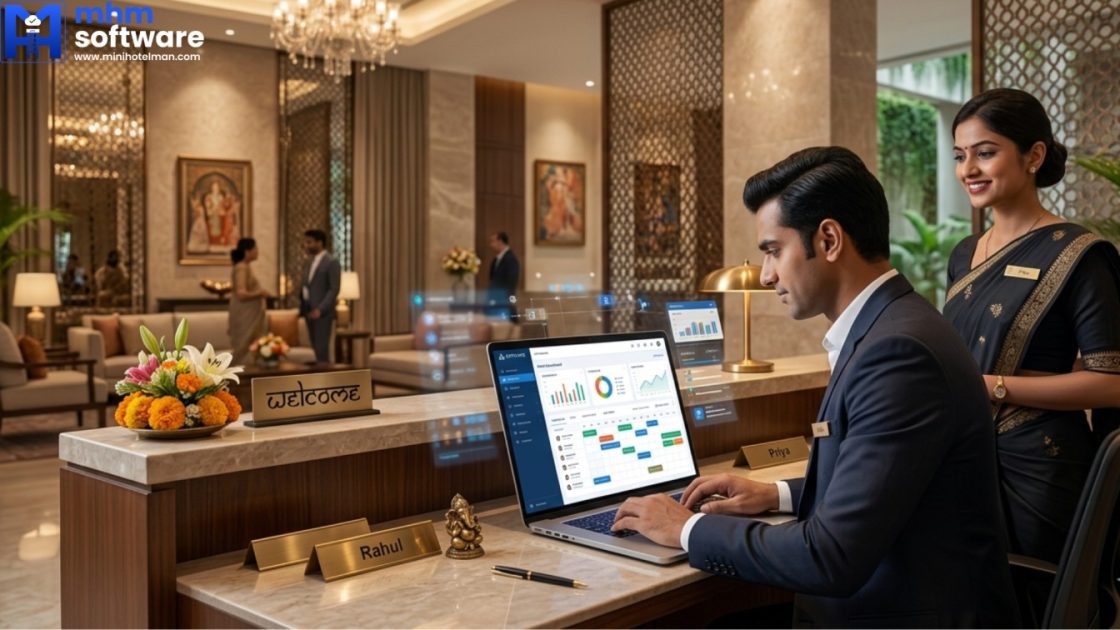
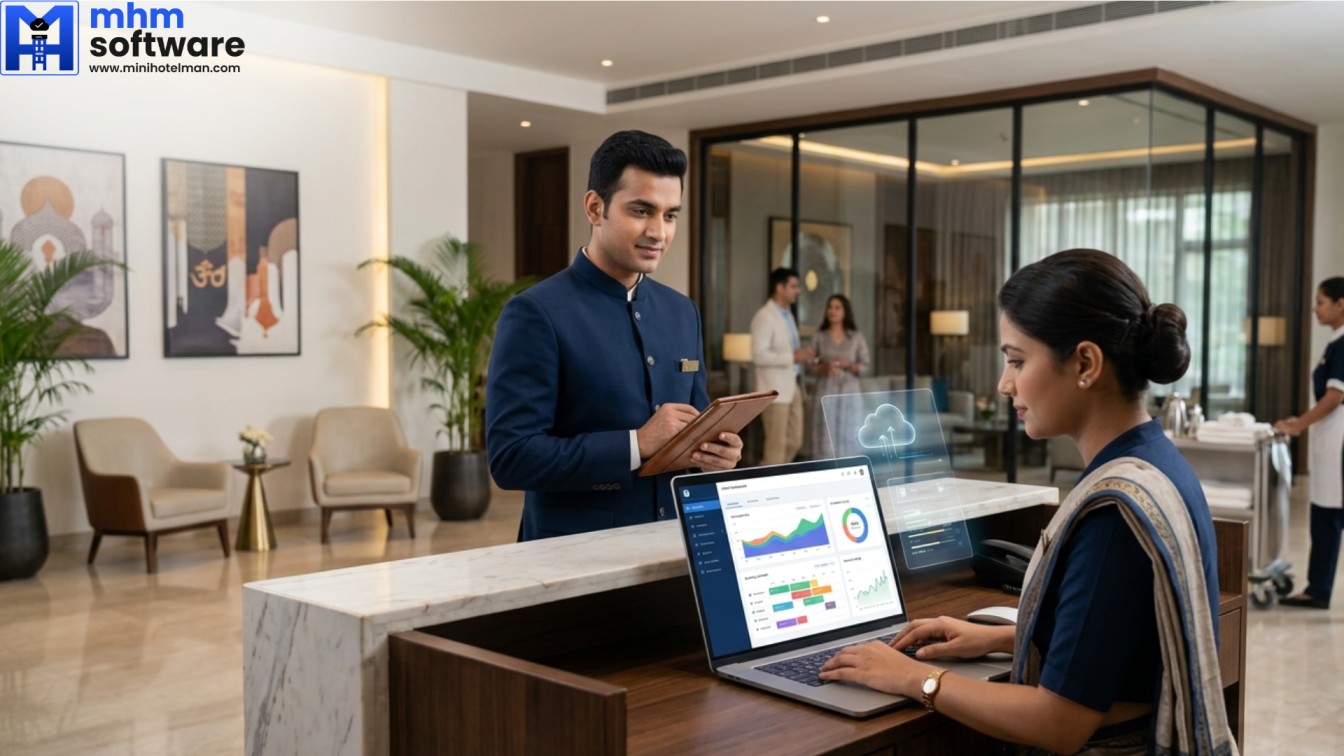
Managing a hotel is no small feat. Whether you\’re running a cozy boutique hotel or a mid-sized property, juggling reservations, guest experiences, housekeeping, billing, and countless other tasks can quickly become overwhelming. That\’s where a Hotel Management System comes to the rescue.
A Hotel Management System is a software solution that simplifies and streamlines the day-to-day operations of a hotel. At Mini Hotel Man, we offer user-friendly, cost-effective hotel management software tailored for small and medium-sized hotels in India. But what exactly makes a Hotel Management System a game-changer for hoteliers? Let’s dive into its key advantages.
1. Streamlined Reservation Management
One of the core features of a hotel management system is its ability to handle reservations seamlessly.
Gone are the days of juggling between multiple OTAs and handling chaotic interfaces or double-bookings. With a Hotel Management System:
- You can easily track bookings in real-time.
- It synchronizes reservations across multiple platforms, such as your website and OTAs (Online Travel Agencies) like Goibibo, MakeMyTrip, Agoda, Booking.com, etc.
- Automated updates ensure room availability is always accurate to avoid situations like check-in denials and further help in increasing revenue.
- This saves you time and helps you maximize revenue by preventing errors.
2. Improved Guest Experience
Here’s how:
Fast Check-Ins and Check-Outs: The system stores guest information, making the process quick and hassle-free.
Automated Billing: Fast automated billing makes it easier for corporate clients.
WhatsApp Integration: Through our PMS you can welcome your guests with an automatic WhatsApp message with all necessary information and also collect feedback via WhatsApp after check-out. This personalization makes the guest feel valued and helps you make lasting impressions and long-term relationships.
Food Ordering: PMS+POS from us helps your guests order food and services easily by scanning the QR code in their room.
3. Efficient Housekeeping Management
Keeping rooms clean and ready is crucial for guest satisfaction, and a Hotel Management System can simplify housekeeping operations.
Assign tasks to housekeeping staff based on check-ins, check-outs, or specific guest requests. Track progress in real-time to ensure rooms are ready promptly.
Minimize delays and miscommunication with automated updates to staff. This boosts productivity and ensures a spotless reputation for your hotel.
4. Centralised Data Management
Running a hotel means dealing with much data—guest information, booking history, payment details, and more. A Hotel Management System acts as a central hub for all this information, making it easily accessible when needed.
With a centralized system, you can avoid duplication and errors. It ensures data security, protecting sensitive guest information from unauthorized access.
You can generate detailed reports to analyze trends and improve your services. Having everything in one place not only saves time but also supports smarter decision-making.
5. Enhanced Revenue Management
Every hotel aims to maximize revenue, and a Hotel Management System helps you do just that. Dynamic Pricing: Adjust room rates based on demand, seasonality, or occupancy levels.
Upselling Opportunities: The system can suggest add-ons, such as spa packages or dining deals, during the booking process. Performance Insights: Use built-in analytics tools to identify what’s working and where you can improve.
By optimizing pricing and services, you can increase your profits without compromising guest satisfaction.
6. Seamless Integration with OTAs and Payment Gateways
In today’s digital age, most bookings come through OTAs or direct online channels. A Hotel Management System ensures smooth integration with these platforms.
Keep room availability and rates updated in real time across all channels. Reduce manual effort and the risk of errors.
Accept multiple payment methods securely, whether through credit cards, UPI, or wallets. With streamlined connectivity, you’ll not only save time but also expand your reach to potential guests worldwide.
7. Cost and Time Efficiency
For small and medium-sized hotels, saving time and money is always a priority. A Hotel Management System:
Reduces the need for manual labor by automating repetitive tasks. Minimizes errors, which can lead to financial losses.
Lets you focus on guest satisfaction and business growth instead of administrative hassles.
At Mini Hotel Man, we understand that affordability matters. Our solutions are designed to deliver maximum value with minimum cost involved.
8. Regulatory Compliance and Reporting
Staying compliant with local regulations can be daunting. A Hotel Management System simplifies this by: Automatically generating reports required by authorities.
Keeping accurate records of taxes, payments, and guest details. Reducing the risk of penalties due to missed deadlines or incorrect data.
With these features, you can operate confidently, knowing you’re meeting all legal requirements.
9. Scalability for Future Growth
Starting small doesn’t mean staying small. As your hotel grows, a Hotel Management System can grow with you.
Add new features or integrations as your needs evolve. Scale up operations without disrupting existing workflows.
Manage multiple properties from a single dashboard, if needed. This flexibility ensures that your investment in a Hotel Management System pays off in the long run.
10. Real-Time Analytics and Insights
Knowledge is power, and a Hotel Management System provides valuable insights into your hotel’s performance.
Monitor occupancy rates, revenue, and guest feedback at a glance. Identify trends, such as peak booking periods or popular room types.
Make data-driven decisions to improve operations and marketing strategies. With these tools, you can stay ahead of the competition and continuously enhance your offerings.
Final Thoughts
A Hotel Management System isn’t just a luxury—it’s a necessity for modern hoteliers. From improving guest satisfaction to optimizing operations and increasing revenue, the benefits are undeniable.
At Mini Hotel Man, we’re committed to helping small and medium-sized hotels in India thrive. Our easy-to-use, affordable Hotel Management System is designed to meet your unique needs, allowing you to focus on what truly matters—creating memorable guest experiences.
So, why wait? Embrace the advantages of a hotel management system today and take your hotel business to new heights.
Looking to learn more? Contact Mini Hotel Man for a free demo and see how we can transform your hotel operations. Take advantage of our free 7-day trial, no commitments, and no questions asked policy.
AI algorithms, at their core, are products of human design. Engineers and developers make decisions about what features to include, what data to prioritize, and what objectives to optimize. These choices inevitably carry the imprints of their perspectives, cultural backgrounds, and values. Thus, AI becomes a manifestation of human thought, embodying the diverse perspectives of its creators.
Contrary to fears of AI replacing human creativity, it is increasingly being seen as a collaborator that can amplify our imaginative capacities. AI tools, from generative art to creative writing assistance, are becoming integral to the creative process. By understanding and learning from human patterns, AI provides a new lens through which we can explore and expand our creative endeavors.
Personalization and User Experience: Tailoring Reality to Individual Perspectives
In the realm of user experience, AI is a game-changer. From recommendation systems to personalized content, AI adapts to individual preferences, creating a customized reality for each user. While this enhances convenience, it also raises concerns about the formation of echo chambers, where individuals are exposed only to information that aligns with their existing perspectives.
As AI increasingly permeates various aspects of our lives, ethical considerations become paramount. Understanding the societal impact of AI requires a nuanced perspective that accounts for its potential to exacerbate inequalities, invade privacy, or disrupt traditional employment structures. Engaging in ethical AI development involves contemplating the broader implications of technological choices on diverse communities.
Closing Thoughts: A Symbiotic Relationship
In the symbiotic dance between AI and human perspective, it becomes clear that the two are intricately linked. AI, far from being a detached entity, is a reflection of our collective values, biases, and aspirations. As we navigate this relationship, it is imperative to approach AI not just as a technological tool but as a collaborative partner, one that challenges us to continually examine and refine our own perspectives.
In the ever-evolving dialogue between humanity and AI, the question is not just about what AI can do for us, but also about what it reveals about us. Embracing this symbiosis may pave the way for a future where technology aligns harmoniously with diverse human perspectives, fostering innovation, understanding, and a shared vision for progress.